A royal hunting ground
People have lived in these hills since the Iron Age. In the days of the Zulu Kingdom the land was a royal hunting ground that was ruled by King Shaka.
1895: the first reserves
Hunting in the 1800s drove wildlife, and especially the white rhino, to very low numbers. In 1895 the Hluhluwe, iMfolozi and St Lucia reserves were proclaimed, which makes them the oldest game reserves in Africa.
Nearly lost again
In the 1930s and 1940s, campaigns against nagana, a livestock disease carried by tsetse fly, nearly wiped out wildlife in the region. Careful management by the conservation authorities rebuilt the herds in the decades that followed.
Operation Rhino
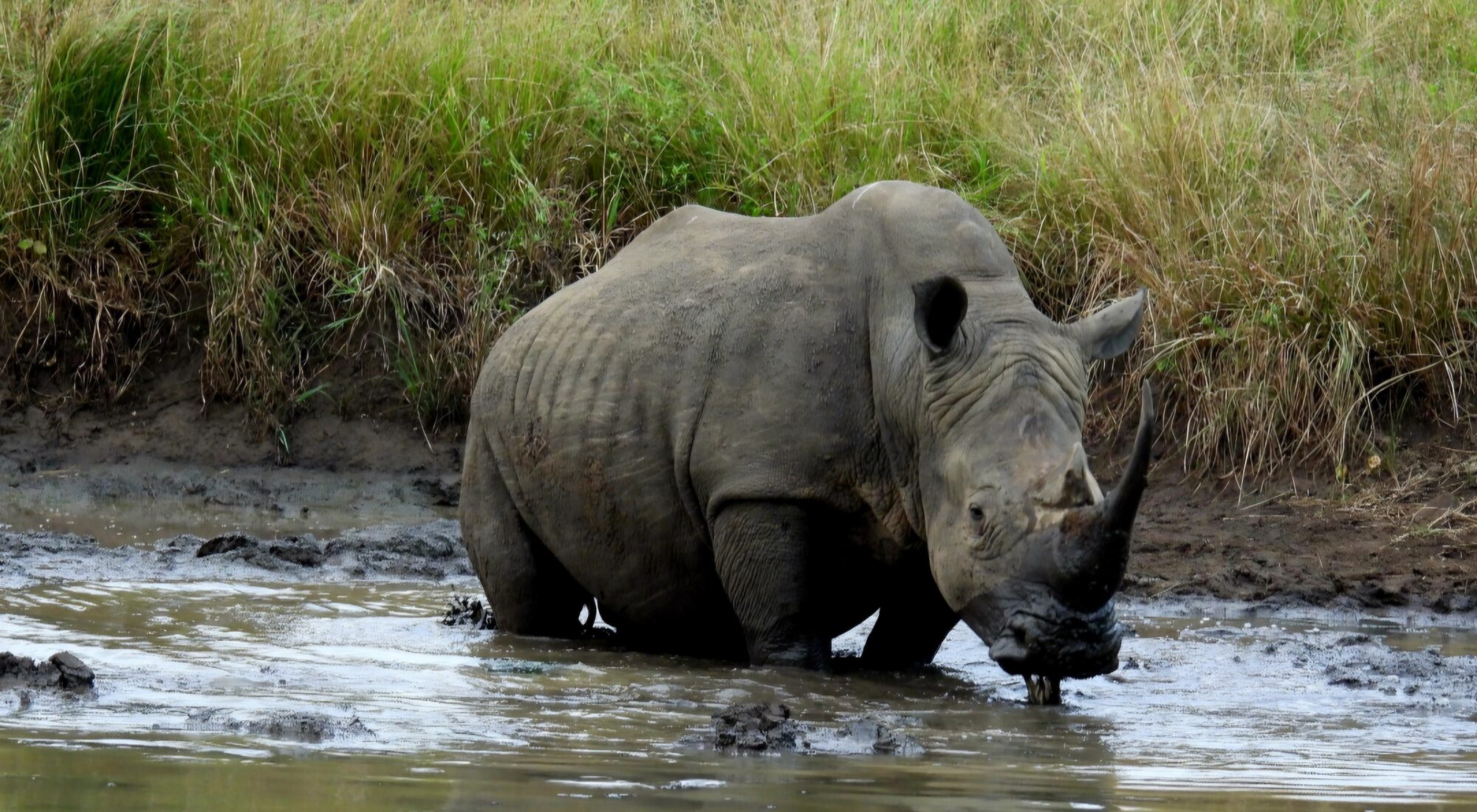
By the early 1900s the southern white rhino had been hunted close to extinction. A population of up to 100 animals survived in South Africa, and the reserves here helped to protect it. By the 1950s the white rhino in the reserve had recovered to around 400.
Then came Operation Rhino. Led by the park’s warden, Ian Player with his trusted master tracker and conservationist Magqubu Ntombela. In the 1950s and 1960s, the Rhino Capture Unit developed ways to capture and transport white rhinos safely, and moved hundreds of them to reserves across their old range. Almost every southern white rhino alive today can trace its ancestry back to this park, which is why conservationists call it the genetic home of the white rhino.
Walking in the wilderness
The iMfolozi Wilderness Trails began in 1959 and are credited with pioneering the wilderness trail idea. They take small groups on foot through the 25,000-hectare iMfolozi Wilderness Area, where there are no roads.
One park, 1989
Hluhluwe and iMfolozi were managed as separate reserves for most of the twentieth century. In 1989 they were joined, together with the corridor between them, to form today’s 96,000-hectare park.
Rhino poaching today
Success has brought a new threat. Rhino horn is targeted by sophisticated, well-funded poaching syndicates, and protecting the park’s rhinos is now a daily effort. Rangers rely on patrols, monitoring and technology such as drones that help detect intruders early, and the park keeps a dedicated anti-poaching unit.
Your conservation fee and your respect for the park rules support the work of protecting the park and its animals.
Timeline
- Iron Age: people settle in the area.
- 1895: the Hluhluwe, iMfolozi and St Lucia reserves are proclaimed.
- 1930s and 1940s: nagana control campaigns nearly wipe out wildlife in the region.
- 1950s and 1960s: Operation Rhino moves white rhino to reserves across Africa.
- 1959: the iMfolozi Wilderness Trails begin.
- 1989: Hluhluwe and iMfolozi are joined into one park.